How to Track Tropes in the Romance Books You Read (and Use Them to Find Your Next One)
On this page
The easiest way to track tropes is to give every book you finish two to four trope tags in the same place you log the book, using one fixed list of tags. Once the tags are on your books, you can filter your shelf for "enemies to lovers" or "found family" and get a reading list built from your own taste instead of a stranger's recommendations.
This guide covers why tropes are worth recording, which ones to keep, how many to put on a book, and how to turn the tags into your next read.
Why track tropes at all
A star rating tells you whether a book was good. It does not tell you why you loved it. Two five-star books can have nothing in common except that you read them in a weekend. Tropes are the pattern underneath: the situations and relationship shapes that keep making you stay up late.
Readers who tag for a year usually find something specific. Their favourites share two or three tropes, and the books they quietly disliked share another one. That is useful the next time a hundred-book TBR list needs sorting.
Which tropes are worth tagging
You do not need a tag for everything. Pick the tropes that actually change whether you want to read a book, and ignore the rest. A good starter list looks like this.
- Relationship shape: enemies to lovers, friends to lovers, second chance, fake dating, marriage of convenience, forbidden love, grumpy and sunshine.
- Pace and heat of the romance: slow burn, instalove, fated mates.
- Situation: forced proximity, one bed, only one room, secret identity, rivals.
- Emotional promise: found family, morally grey love interest, healing, redemption.
Keep the list short enough that you remember it. Twenty tags you use beat eighty you never open. If a trope you love is missing, add it once and reuse the same wording from then on.
How many tags per book
Two to four. One tag is too thin to find patterns. Eight tags means you are copying the blurb, and the filters stop separating anything. A useful test: tag only what you would have wanted to know before starting the book.
A routine that takes thirty seconds
- When you finish a book, set the rating and heat first, while you remember how it felt.
- Add the tropes that were really in the story, not the ones the cover promised.
- If the book had one standout, mark it. A single favourite trope per book is the most useful tag you can have.
- Once a month, look at your favourites together and write down the tags that keep appearing.
Turning tags into your next read
Tags only pay off when you can filter by them. Open your finished shelf, pick one trope and look at the five-star books in that group. Then do the same with your unread list: any book on your TBR with the same tag is a safe bet. Combine it with the heat and tear ratings from spice and tear ratings, explained and you can ask for exactly the evening you want: a low-heat, one-tear, found-family book.
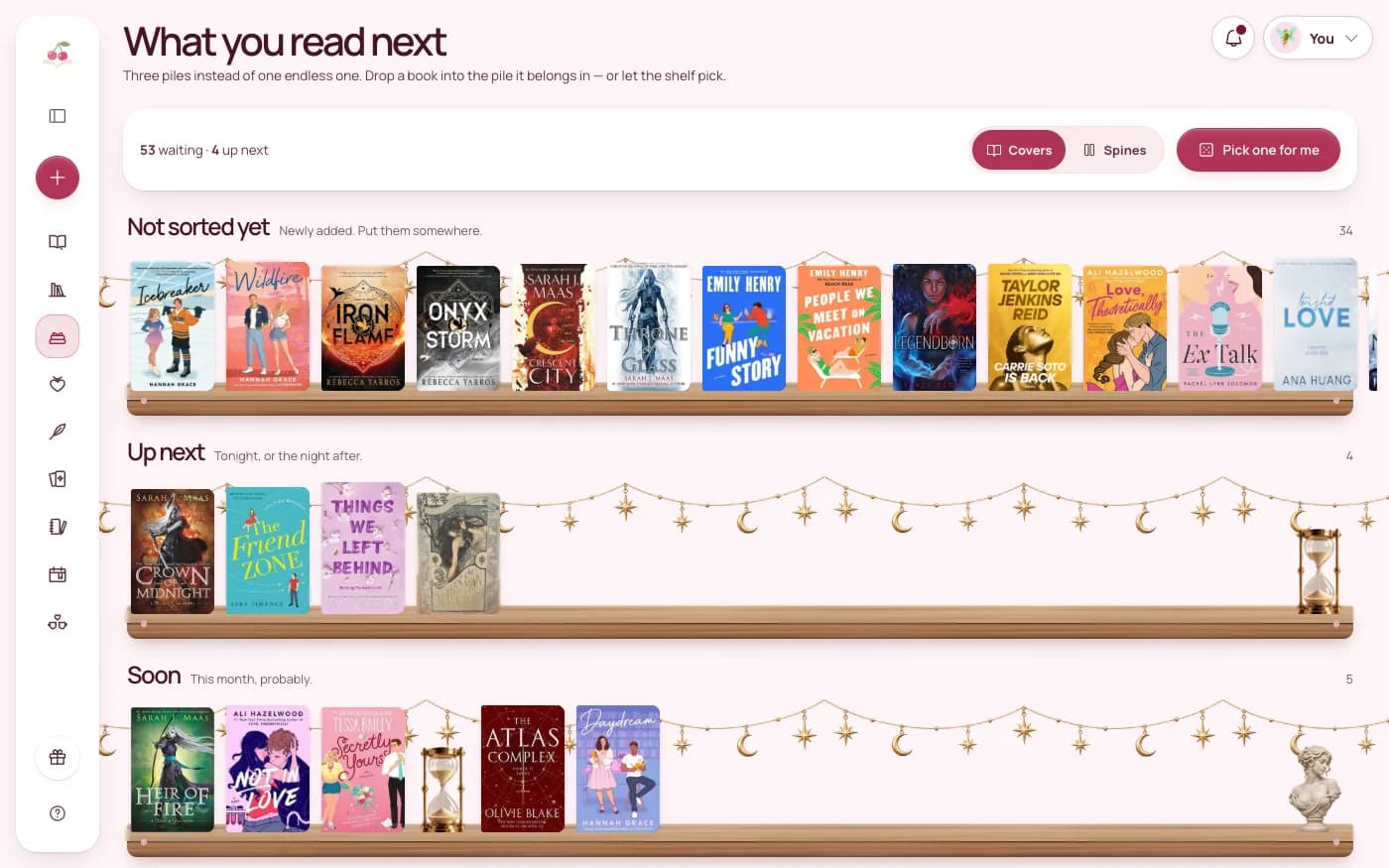
This also makes a long list calmer. If you are overwhelmed by how many books you own, manage your TBR shows how to sort it in three piles, and trope tags are the fastest way to decide which pile a book belongs to.
| Method | Good for | Watch out for |
|---|---|---|
| Notes app or paper journal | Starting today, no setup | No filtering, so patterns are hard to see |
| Spreadsheet with a column per trope | Counting and charts | Typing the same tags again and again |
| A reading tracker with trope tags and filters | Finding books by trope in one tap | Pick one that lets you export your data |
Tracking tropes in Cherry Books
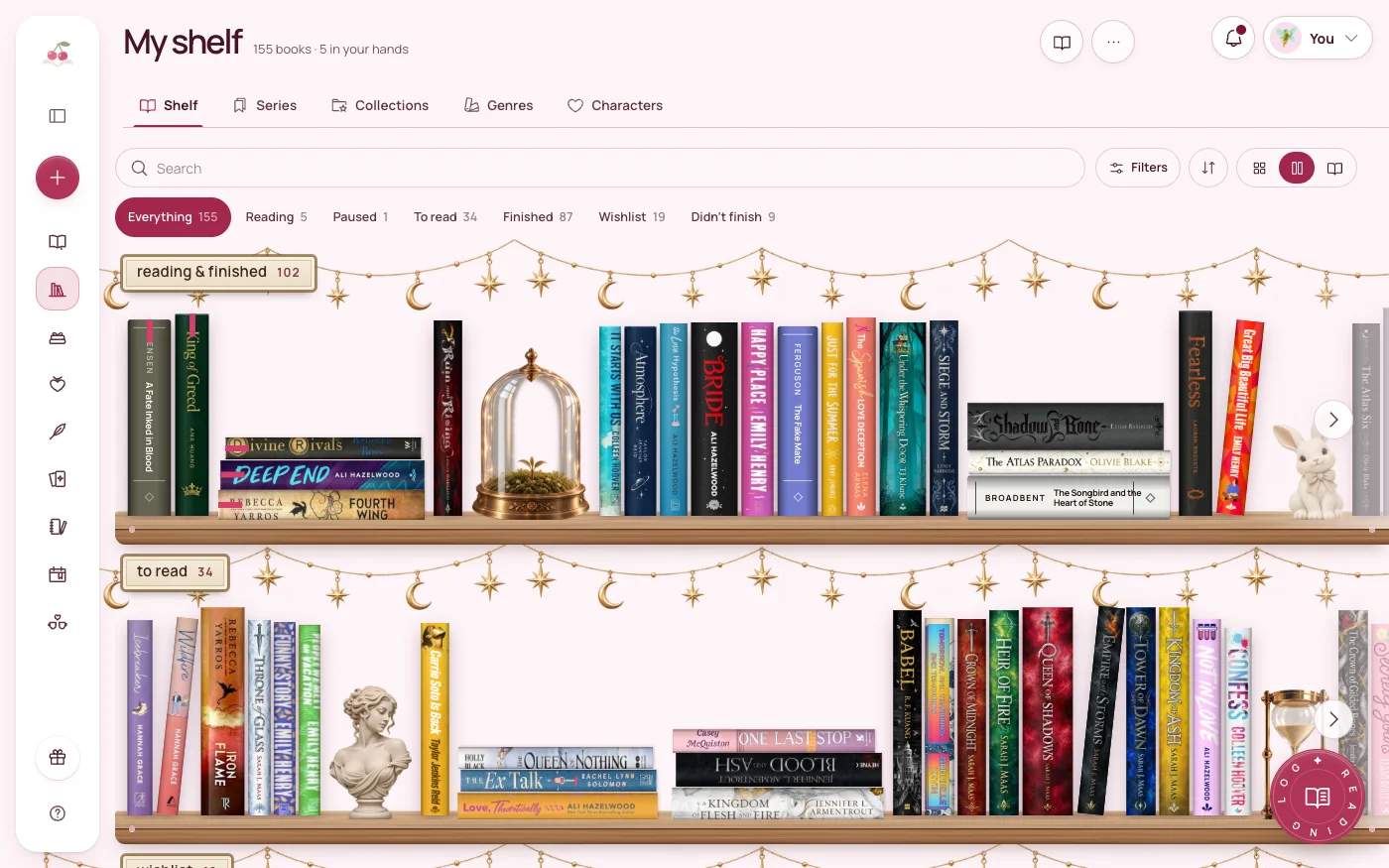
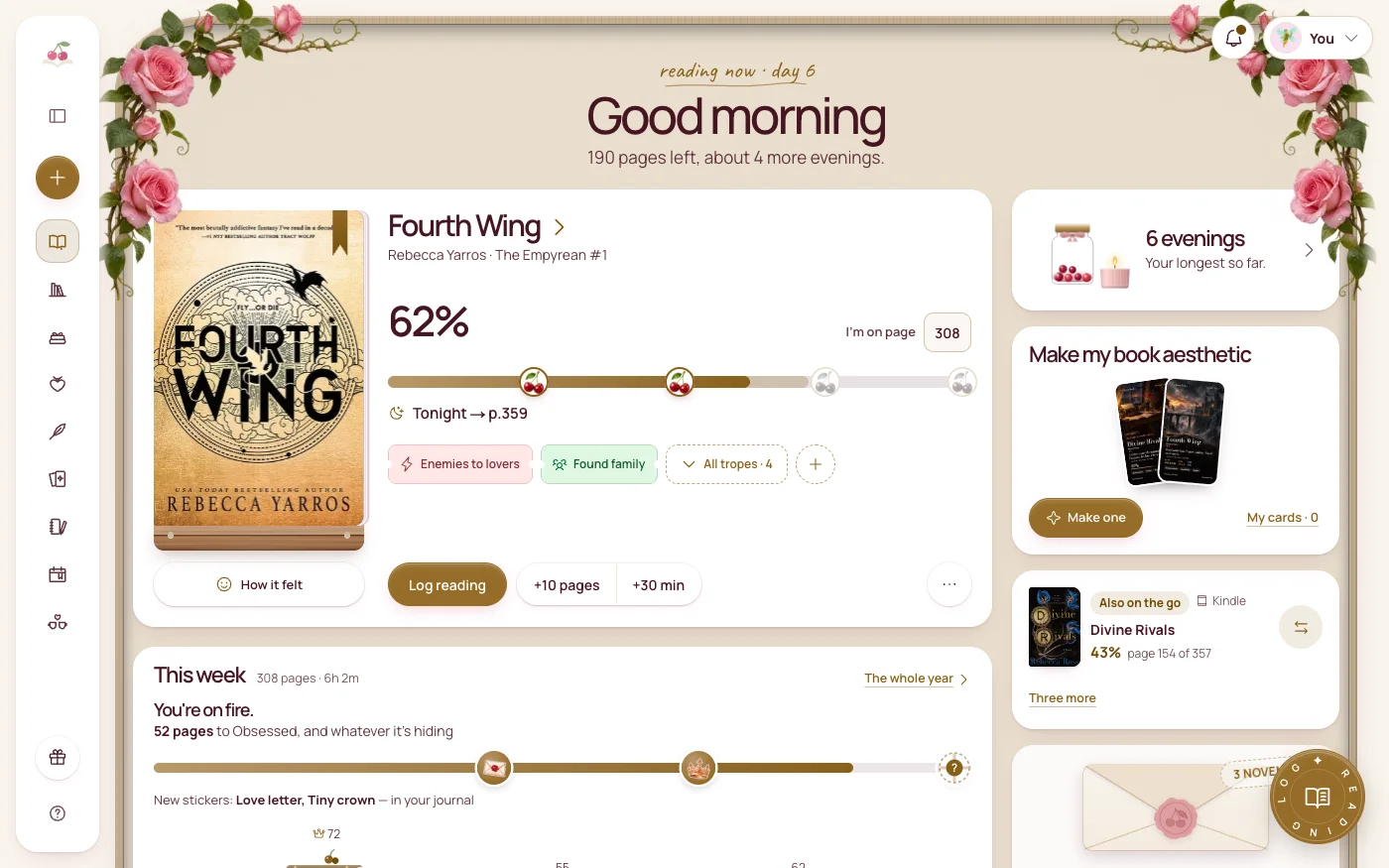
In Cherry Books, each book has trope tags next to its spice and tear meters, and you can filter the library by trope, so a search for "slow burn" or "fake dating" shows only your own shelf. If you move over from Goodreads, the import brings your books across and you can add tags as you go; see how to move your Goodreads shelf. There is a 7-day free trial if you want to tag a handful of books first.
Whichever tool you use, the habit is the one that matters: a short fixed list, two to four tags per book, and a monthly look at what keeps showing up. In a year you will know your taste better than any recommendation list does.
Try Cherry Books free for 7 days
Keep your notebooks, quotes, TBR and reading progress together. A payment card is required for the 7-day subscription trial. Cancel before the trial ends to avoid a charge; the monthly plan is $7.99 after the trial.
Keep reading
How to Track Your Reading as a Romance Reader
What a reading tracker for romance books should record beyond stars: spice, tears, tropes, series order and kept lines. A practical setup guide.
Spice and Tear Ratings, Explained (and How to Build Your Own Scale)
Closed door, open door, one flame or five? How spice ratings and tear ratings work for romance readers, and how to build a scale you can use consistently.
How to Manage a TBR That Has Gotten Out of Hand
A calm method for taming a huge to-be-read list: three piles, a short up-next shelf, a wish list with a basket and a random pick for undecided nights.