How to Track Content Warnings for the Books You Read
On this page
To track content warnings, give every book a short list of the things you would want to know before starting it, keep it separate from your tropes, and store it with the book. Then the list is there when you look at the book again, and your own limits shape what you read next.
This guide covers where to find warnings, what to write down, and how to keep the list useful without turning it into a spoiler.
Why keep your own list
Romance and romantasy are full of strong material, and not every reader wants all of it. Some readers avoid certain topics completely. Others read them only in the right mood, or want to be prepared.
A rating cannot tell you this. A book can be five stars for one reader and the wrong choice for another because of one scene. A short warning list lets you decide before you start.
Where to find warnings
- The author's own page. Many authors list content warnings on their website or at the front of the book.
- The book's page at a bookshop. Some publishers add them to the description.
- Reader-made lists. Book sites and communities often collect warnings from people who have read the book. These are useful, but they can miss things, so treat them as a guide.
- A friend who has read it. Often the quickest answer for a specific worry.
If you cannot find a list, it is fine to skip the book, or to read it carefully and be ready to stop.
What to write down
- The warning, in plain words. Two or three words, such as grief, violence or captivity. Do not retell the scene.
- How strong or how central it is. A short word like brief, on the page or main plot tells you more than the topic alone.
- Your own verdict after reading. If a book had something that was not listed, add it. The next reader of your shelf, which is you, will thank you.
Keep warnings in their own field, apart from tropes. A trope is what you came for. A warning is what you want to know first. They answer different questions.
Keep your own limits in one place
It helps to have two short lists of your own: topics you avoid, and topics you only read in the right mood. When you add a book to your TBR, compare its warnings with your lists and move it to a different shelf if it does not fit.
These lists change over time. What you could not read a year ago may be fine now, and the other way round. Treat them as notes to yourself, not as rules.
Avoid spoilers when you write them
A warning names a topic. It does not give away the plot. Writing death of a parent is a warning. Writing who dies and when is a spoiler. Keep each one to the topic, so you can look at your list months later without ruining a book you have not read yet.
When you stopped reading because of one
If a book had something you did not expect and you stopped, record it. Mark the book as DNF with the reason; our guide to tracking books you did not finish shows how. Next time you see a book with the same note, you will know.
How Cherry Books handles it
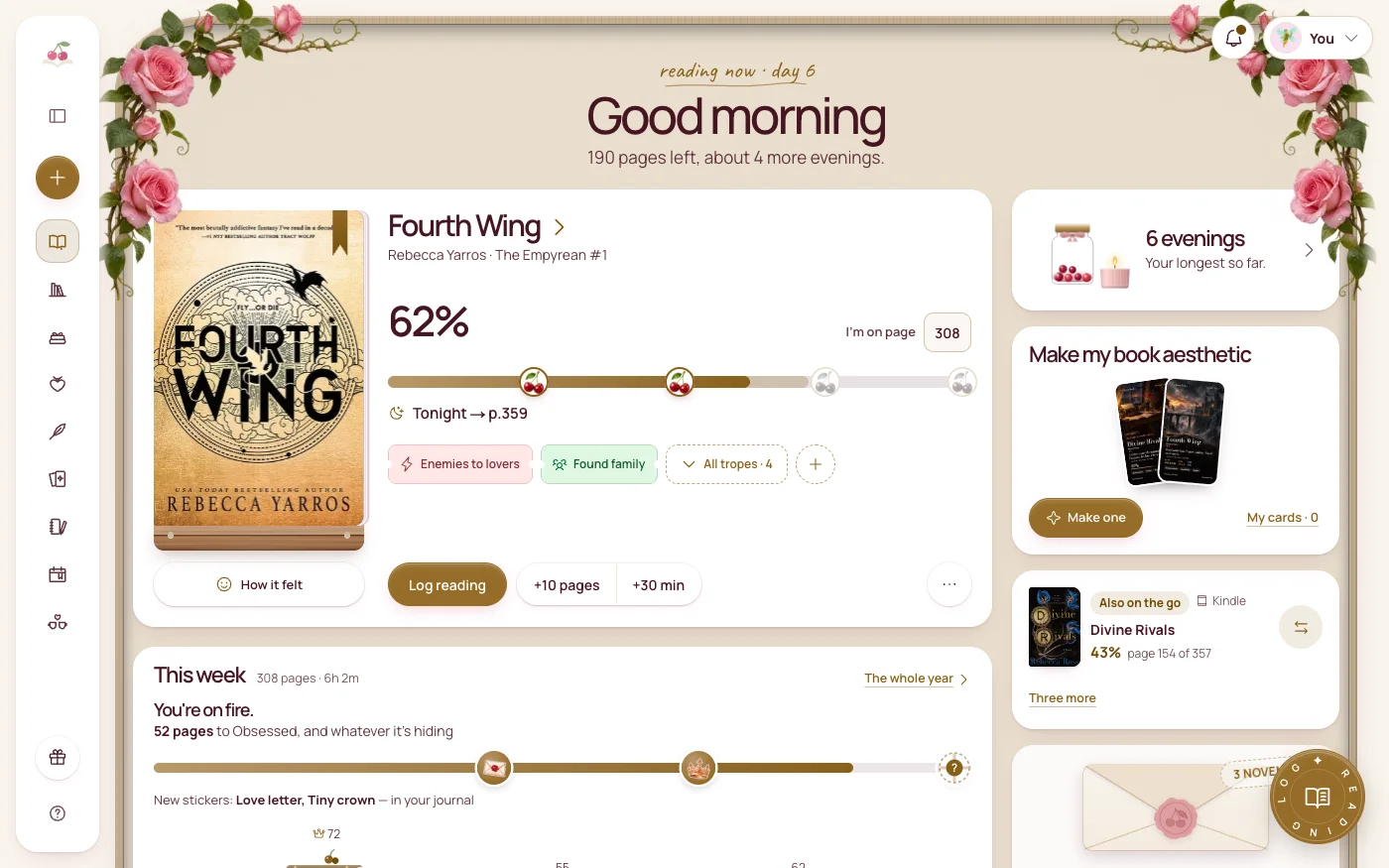
In Cherry Books, every book has a Content warnings field right beside its tropes and the spice and tear meters, so you can record them in one place when you add or finish a book. Everything you write is your own private note on the book, and it stays with the book on your shelf.
The short version
- Check the author, the bookshop page, readers and friends for warnings.
- Write each one in two or three words, with how strong it is.
- Keep warnings in a separate field from tropes.
- Name the topic, never the plot.
- Update your own limits whenever they change.
A warning list is not about reading less. It is about reading the right book at the right moment.
Try Cherry Books free for 7 days
Keep your notebooks, quotes, TBR and reading progress together. A payment card is required for the 7-day subscription trial. Cancel before the trial ends to avoid a charge; the monthly plan is $7.99 after the trial.
Keep reading
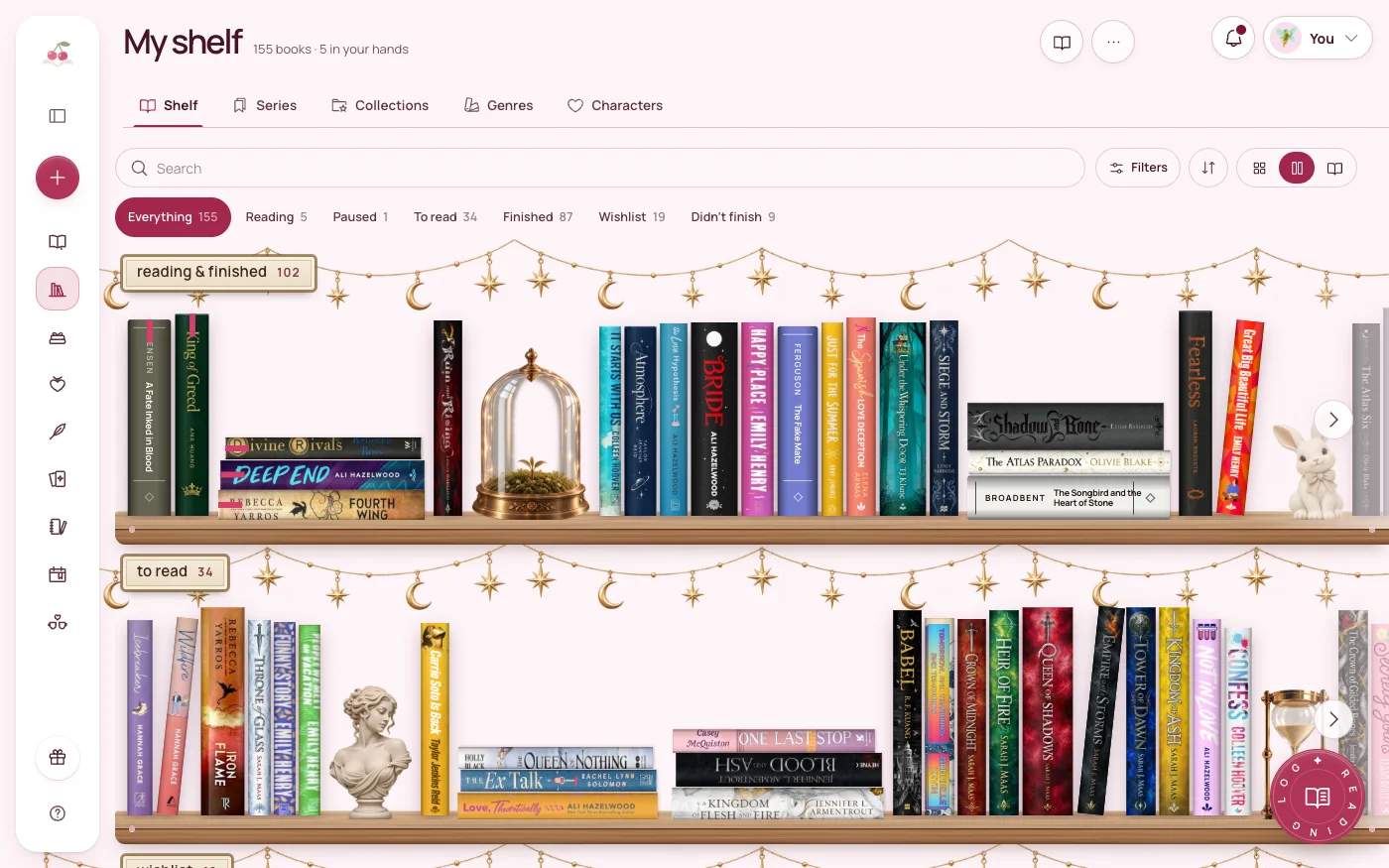
How to Track Tropes in the Romance Books You Read (and Use Them to Find Your Next One)
Tag two to four tropes on every romance you read, pick which ones to keep, and filter your shelf by trope to find your next book.
Spice and Tear Ratings, Explained (and How to Build Your Own Scale)
Closed door, open door, one flame or five? How spice ratings and tear ratings work for romance readers, and how to build a scale you can use consistently.
How to Track Books You Did Not Finish (DNF) Without the Guilt
Mark a book as DNF, note the page and the reason, and keep it on your shelf. The pattern shows you what to skip next time.