How to Track Books You Did Not Finish (DNF) Without the Guilt
On this page
To track a book you did not finish, mark it as DNF, write down the page where you stopped and a few words on why, and leave it on your shelf instead of deleting it. That small record turns a guilty pile of abandoned books into something useful: a list of what not to pick up next.
This guide covers when it is fine to stop, the three things worth recording, and how to read your DNFs after a few months.
Why a DNF is worth recording
Most readers delete the books they gave up on, or never log them at all. Then the same book comes back in a recommendation, you add it to your TBR again, and you lose another weekend to chapter three.
A DNF is information. It tells you something your five-star books cannot: what you do not enjoy. If you keep it, you can use it.
When it is fine to stop
There is no rule, but a few signals are common among readers who DNF without regret.
- You dread picking it up. If reading feels like a chore for several days in a row, the book is not working for you right now.
- You are skimming. Reading only the dialogue to get through it is a sign you stopped caring a while ago.
- It is the wrong mood, not a bad book. This one belongs in a pause, not a DNF (more on that below).
- You gave it a fair try. Many readers use a rough limit, such as the first fifty pages or the first tenth of the book, before deciding.
Time is the only thing you cannot get back from a book. Stopping one you are not enjoying makes room for the one you will.
Record three things
- The status. Did not finish, so it stops counting as currently reading.
- Where you stopped. The page or the percentage. It shows you whether books lose you early or in the middle.
- One short reason. A few words is enough: slow middle, did not like the narrator, too much spice for me, not in the mood.
Do not write a review. The reason is only for you, so keep it as short as a note on a sticky tab.
Pause or DNF?
If you think you might come back, pause the book. If you know you will not, call it a DNF. You can always move a book from one to the other later, so the choice does not need to be perfect.
Be honest with yourself about the pile of paused books too. A book that has been paused for a year is probably a DNF that has not been admitted yet.
Read the pattern after a few months
Once you have five or ten DNFs with reasons, look at them together. You are looking for the same word coming up again.
- If slow middle keeps appearing, filter your TBR for books readers call fast-paced before you start the next one.
- If the same trope shows up, take it off your wish list. Our guide to tracking tropes in romance books shows how to see this on your own shelf.
- If most of your DNFs are books you bought because of hype, that is worth knowing before the next big release.
- If they cluster in one genre, you might just like a smaller part of it than you thought.
This is also a good moment to sort a long TBR. Our TBR list guide covers how to cut it down using exactly this kind of signal.
Do DNFs count in your totals?
It is up to you. Many readers keep their finished-books number clean and count only pages read separately. Others count a DNF over fifty percent as a read. Pick one rule and stay with it, so your yearly numbers mean the same thing in December as they did in January.
How Cherry Books handles it
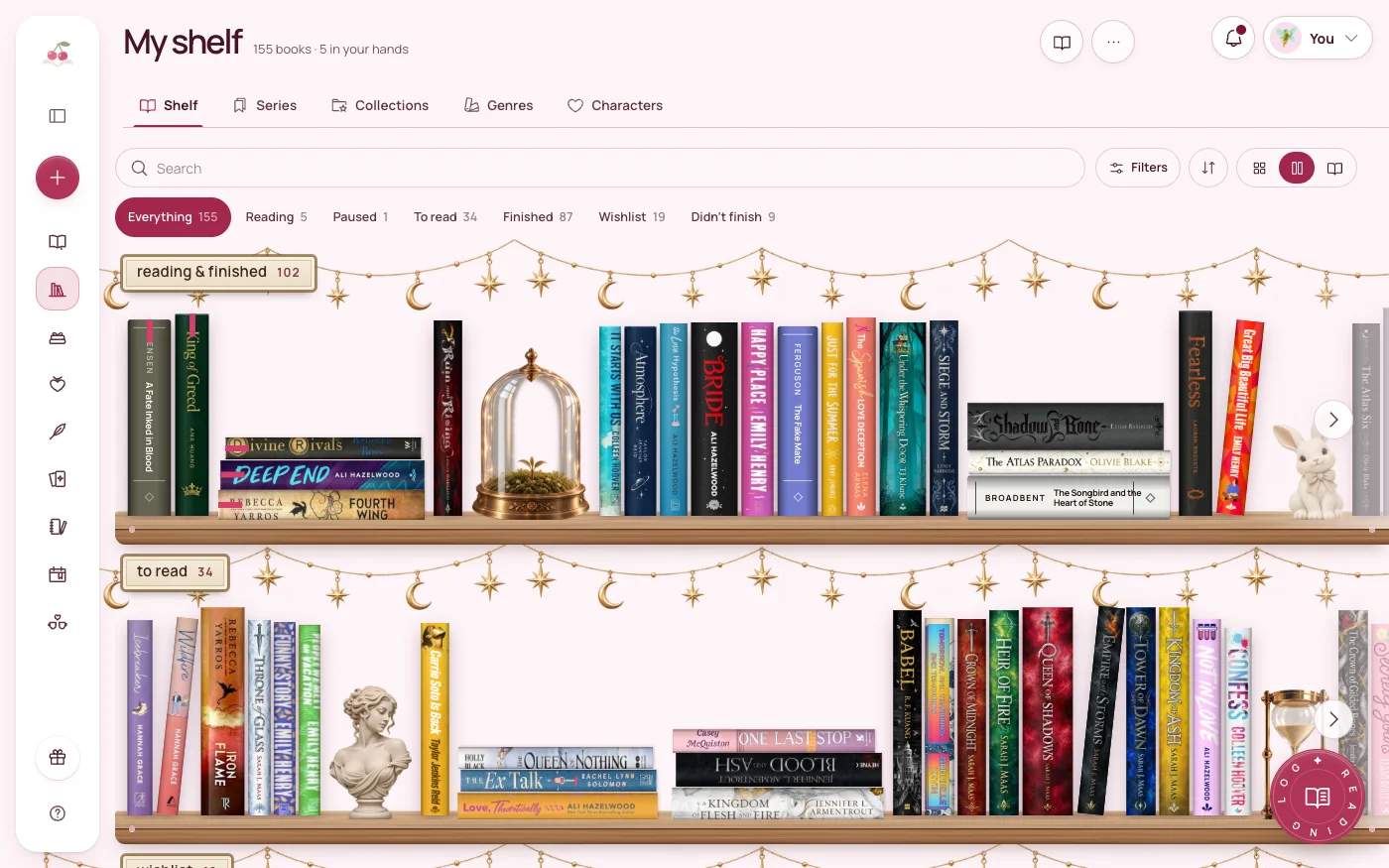
In Cherry Books, every book can sit on a shelf marked Didn't finish, and the book page has a Stop reading (DNF) button next to Pause. Books you stop stay on the shelf with everything you marked on them, such as the rating, the tropes and your notes, and nothing is deleted. The number of books you did not finish can also show up in your year recap, if you want it there.
The short version
- Stop when reading feels like a chore, not when you feel guilty.
- Mark the book as DNF, with the page and one short reason.
- Pause a book you will return to, and DNF the ones you will not.
- Do not delete it. Keep it, so you do not pick it up again by accident.
- After a few months, read your reasons and look for the repeats.
Not finishing a book is not a failure. It is a quick way to learn what you want to read instead.
Try Cherry Books free for 7 days
Keep your notebooks, quotes, TBR and reading progress together. A payment card is required for the 7-day subscription trial. Cancel before the trial ends to avoid a charge; the monthly plan is $7.99 after the trial.
Keep reading
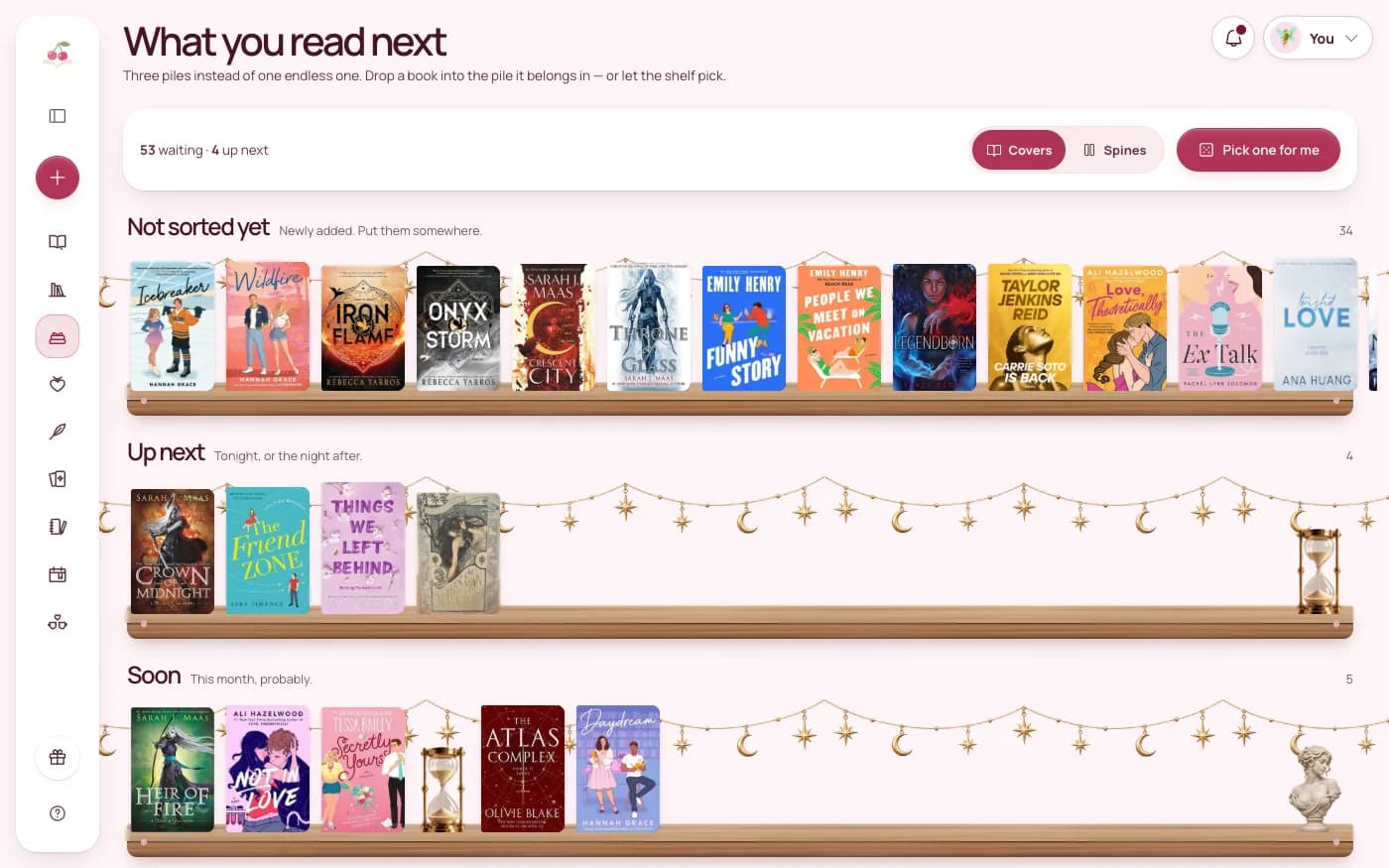
How to Manage a TBR That Has Gotten Out of Hand
A calm method for taming a huge to-be-read list: three piles, a short up-next shelf, a wish list with a basket and a random pick for undecided nights.
How to Track Tropes in the Romance Books You Read (and Use Them to Find Your Next One)
Tag two to four tropes on every romance you read, pick which ones to keep, and filter your shelf by trope to find your next book.
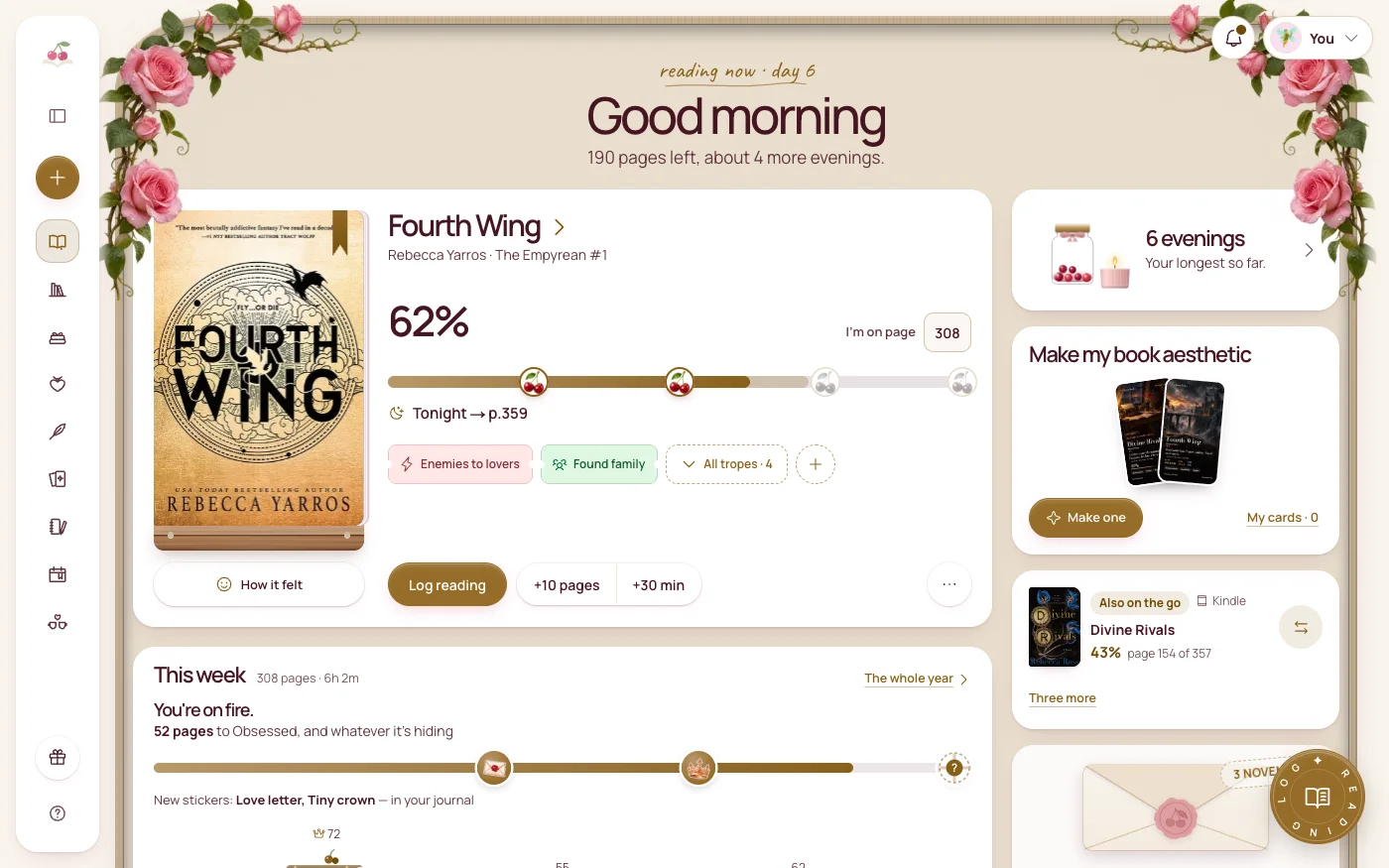
How to Track Your Reading as a Romance Reader
What a reading tracker for romance books should record beyond stars: spice, tears, tropes, series order and kept lines. A practical setup guide.