Romance Tropes Explained: A Plain-English List With What Each One Means
On this page
A romance trope is a familiar story shape that readers recognise and look for, such as enemies to lovers, fake dating or a second chance. Tropes do not tell you what happens in a book. They tell you what kind of ride it is, which is why readers search by them.
Below is a plain-English list of the tropes you will see most often, grouped by what they are about, with what each one promises and who tends to love it.
How two people end up together
- Enemies to lovers. The two leads start out opposed, often with real reasons, and the story is how that turns into love. If you like banter and tension, start here.
- Rivals to lovers. A close cousin of the one above. They compete for the same job, prize or place, and the competition is part of the attraction.
- Friends to lovers. Two people who already know each other well slowly realise they want more. It is about comfort, trust and the fear of ruining a friendship.
- Second chance. They had something before, and it ended. Years later they meet again. Expect old hurt, regret and a good deal of longing.
- Forbidden love. Something stands between them, such as a rule, a rival family or a job. The pull is stronger because they should not.
- Fated mates. A bond, magic or destiny says they belong together. Common in fantasy and romantasy, and the fun is often in how they accept it.
The situation that puts them together
- Fake dating. They pretend to be a couple for a good reason, and the pretending starts to feel real. A reader favourite for a reason: you get closeness with a built-in excuse.
- Marriage of convenience. They marry for practical reasons, not love. Expect two strangers learning each other at the breakfast table.
- Forced proximity. A road trip, a snowed-in cabin, a shared workplace or a journey where they cannot get away from each other. Closeness does the work.
- Only one bed. A small, famous situation inside forced proximity. It is shorthand for the moment when they can no longer pretend they do not notice each other.
- Secret identity. One of them hides who they are, and someone eventually finds out. The tension is in the lie and the reveal.
What the two leads are like
- Grumpy and sunshine. One is guarded and sharp, the other is warm and relentless. The grump slowly softens.
- Morally grey love interest. Not a villain, not a hero. Their choices are questionable and the reader has to decide how much they forgive.
- Found family. The leads build a circle of friends who become their family. It adds warmth around the romance.
How the story moves
- Slow burn. The romance takes its time. A first touch can be a big event, and the wait is the whole point.
- Instalove. They are drawn together almost at once. It trades build-up for intensity, and some readers love that.
- Love triangle. One person caught between two. Opinions on this one split strongly, so it is a good example of a trope worth tagging.
Tropes are the route, not the ending
Most romance promises a happy ending, or at least a hopeful one. So a trope does not spoil a book. It describes the road: how they meet, what keeps them apart and what the story is about in between.
That is also why one trope can feel perfect in one book and boring in another. What you love is usually the combination, such as grumpy and sunshine with forced proximity, not a single tag.
How to find the tropes you actually like
Do not try to memorise a long list. Pick a few tropes to follow, and notice which ones keep appearing in the books you rate highest. A few months of that tells you more than any list.
The easiest way is to tag every book you finish with two to four tropes. Our guide to tracking tropes in romance books explains how, and how to turn the tags into your next read.
Tropes and heat are different things
A trope does not tell you how spicy a book is. A fake dating romance can be sweet or very explicit. If heat matters to you, track it separately; see our guide to spice and tear rating systems.
How Cherry Books handles it
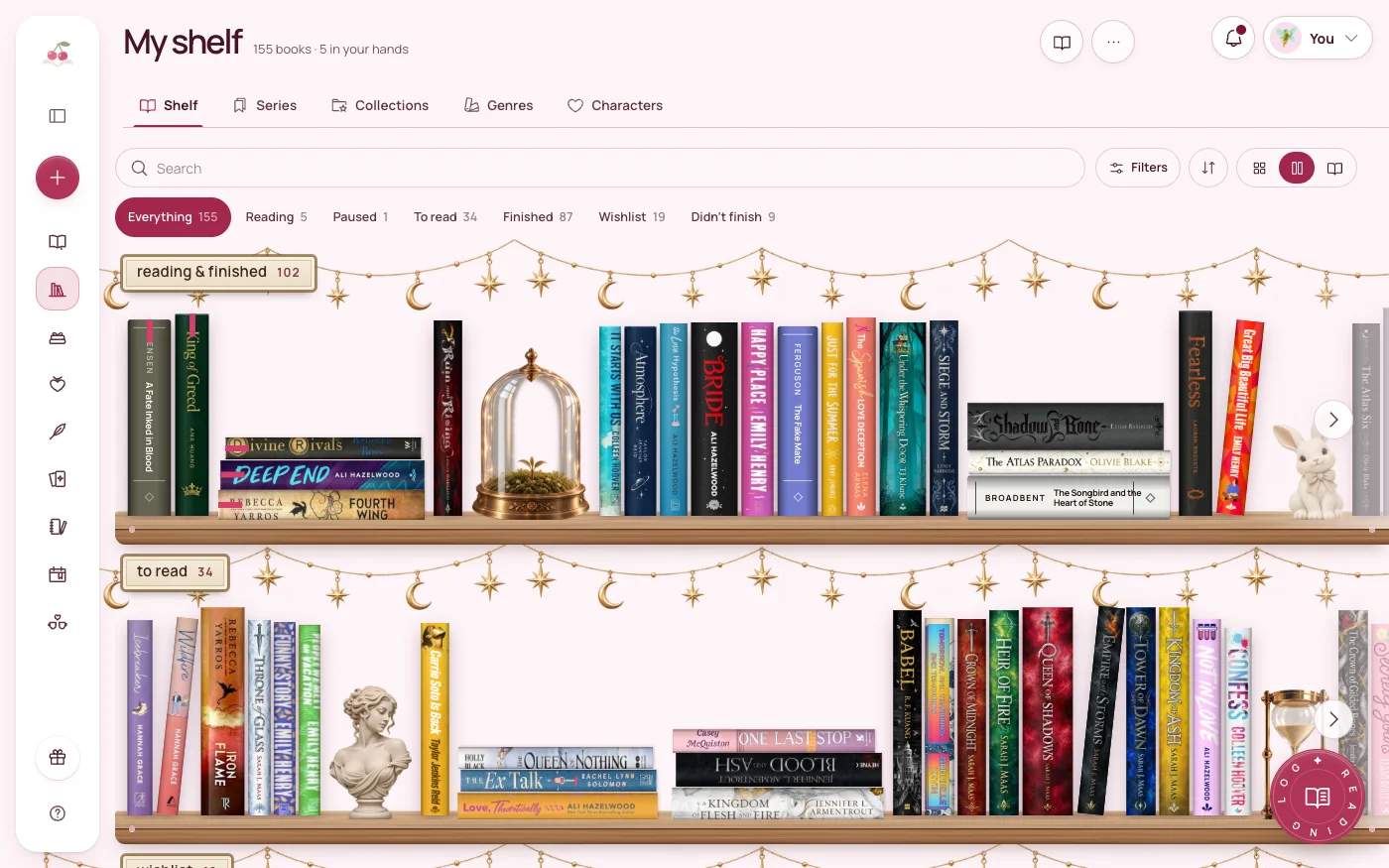
In Cherry Books, every book has a place for its tropes, next to the spice and tear meters. Tag them when you finish, and your shelf starts to show which tropes you rate highest, so the next book you pick can be one you already know you will like.
The short version
- A trope is a story shape readers look for, not a plot spoiler.
- Tropes fall into a few groups: how they get together, what puts them in the same room, what the leads are like and how the story moves.
- The best loved books usually combine two or three.
- Follow only the ones you notice, and tag them as you finish a book.
- Keep heat and tropes in separate boxes.
Try Cherry Books free for 7 days
Keep your notebooks, quotes, TBR and reading progress together. A payment card is required for the 7-day subscription trial. Cancel before the trial ends to avoid a charge; the monthly plan is $7.99 after the trial.
Keep reading
How to Track Tropes in the Romance Books You Read (and Use Them to Find Your Next One)
Tag two to four tropes on every romance you read, pick which ones to keep, and filter your shelf by trope to find your next book.
Spice and Tear Ratings, Explained (and How to Build Your Own Scale)
Closed door, open door, one flame or five? How spice ratings and tear ratings work for romance readers, and how to build a scale you can use consistently.
How to Manage a TBR That Has Gotten Out of Hand
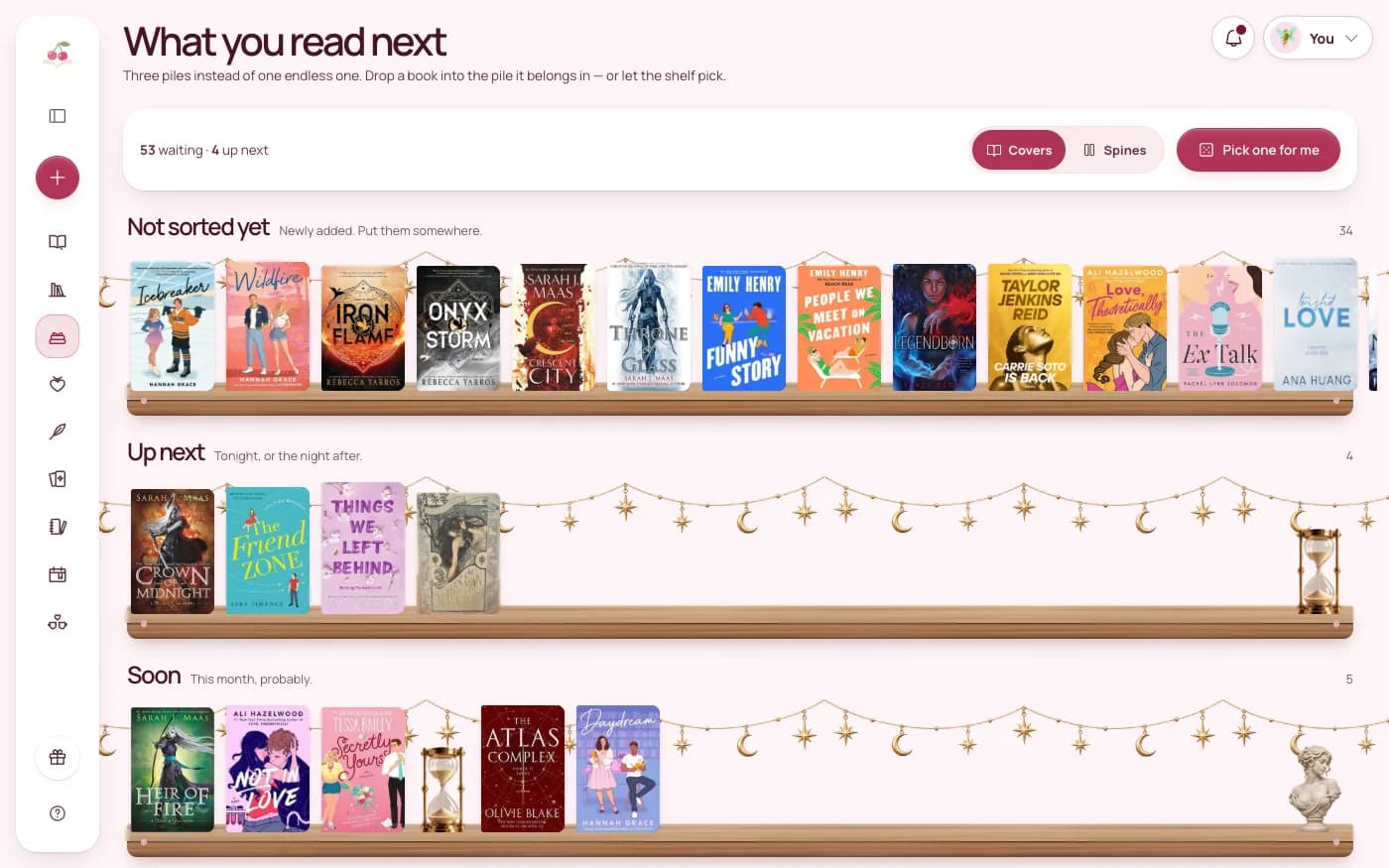
A calm method for taming a huge to-be-read list: three piles, a short up-next shelf, a wish list with a basket and a random pick for undecided nights.