36 Reading Journal Prompts for Romance Readers (and How to Keep One)
On this page
A reading journal is the part of reading that nobody sees, which is exactly why it is worth keeping. A rating records a verdict. A journal records the reading: the evening you stayed up too late, the paragraph that rearranged your opinion of a character, the thing you did not dare say in a review.
Many people start a journal, write three beautiful pages and quit because it feels like a chore. The fix is to make it small, make it specific and give yourself a prompt when your mind is blank. Below are 36 prompts written for romance readers, followed by some advice on keeping a journal going whether it lives in a notebook or an app.
Before you start a book
- What made you pick this one up, the cover, a friend, a trope or the title?
- What do you hope it will be, and what are you afraid it will be?
- Which trope are you most hoping for, and which one would make you close the book?
- What mood are you in right now, and is this the right book for it?
- Write the question you want the book to answer by the end.
- How do you think it ends? Write it down and seal it, and compare when you finish.
- Which of your past reads does this one remind you of, and is that a good sign?
While you are reading
- Copy out the line you read twice, with its page number.
- Who is your favourite character so far, and what did they do to earn it?
- Which character do you not trust, and why? Revisit this in the final third.
- Write down the exact page where you realised you were hooked.
- What are you theorising about right now? Record it before the book proves you wrong.
- Where did you put the book down to walk around the room?
- What scene would you want to see in a film adaptation, and who would you cast?
- Which line of dialogue would you put on a T-shirt?
Right after you finish
- Describe how you feel in one sentence, with no thinking and no editing.
- Rate it for heat and for tears, and write what earned each number. Our guide to spice and tear ratings can help you set your scale.
- Was the ending what you wanted, what you expected or something better?
- Which trope was the star of the book, and was it done well?
- What would you change if you could rewrite one chapter?
- Did your prediction from before you started come true?
- Write a short letter to the main character. You do not have to send it.
- Which supporting character deserves a book of their own?
- Who in your life would you hand this book to, and who would you never lend it to?
Looking back
- Which book from three months ago do you still think about, and why?
- Which five-star rating from last year would you now give four?
- What pattern do you notice in your favourite books? Tropes, settings, authors, moods.
- Which book did you almost abandon and are glad you did not, or the reverse?
- What is the best thing a book gave you this month?
- Which character do you miss?
For slumps and book hangovers
- What are you in the mood for that you have not found yet? Describe it as if you were ordering a meal.
- Which comfort read always works, and what is it about that book?
- If you could live inside one fictional town for a year, which one?
- Write the opening line you wish a book would start with.
- What are you avoiding reading, and why?
- Which book are you saving for a special occasion?
How to keep it going
- Set a tiny minimum. One sentence counts. If you want to write more, you will, and if you do not, you have still kept the habit.
- Write at the same moment every time. Right after closing the book is the easiest hook, because the feelings are fresh.
- Separate the journal from the review. A review is for other people. The journal is private, so you can be messy, petty and enthusiastic.
- Do not catch up. If you miss a week, start on the next page. Backfilling is how journals become homework.
- Make it pleasant. Choose a pen you enjoy, a page you like looking at, or an app you want to open.
Paper or app?
Paper is tactile, private by nature and free of notifications. It is harder to search, back up or total up at the end of the year. A digital journal attached to each book makes it easy to find what you wrote about a title two years ago and to keep notes beside the quotes, ratings and dates for the same book. If you go digital, choose something that lets you export what you wrote and be clear about who can see it. Our checklist in what to check before leaving Goodreads works for any app you are testing.
How the journal works in Cherry Books
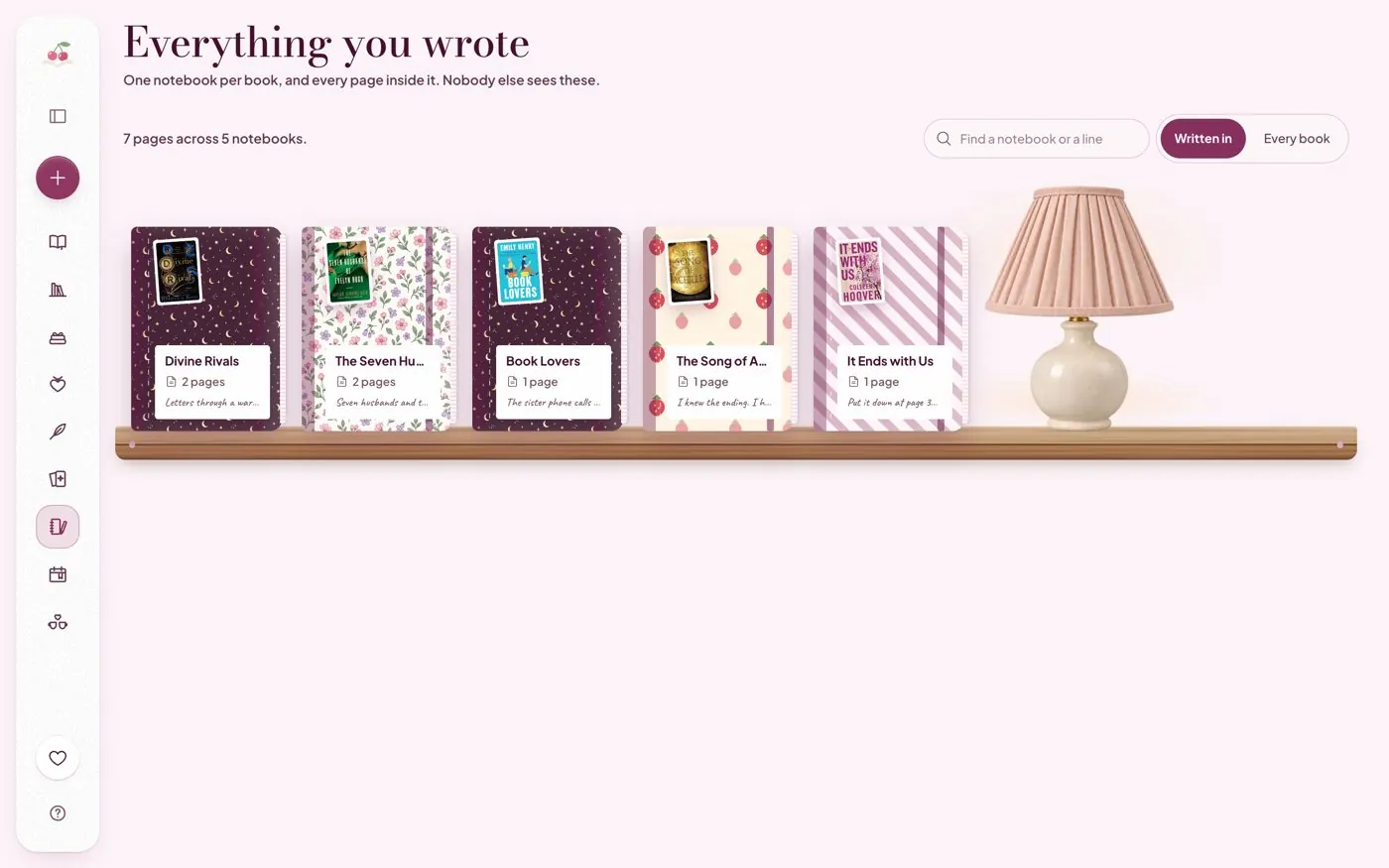
In Cherry Books, every book gets its own notebook on your shelf. Pages are typed on a typewriter that feeds the paper out, every page stays on the shelf, and nobody else sees them. Next to it you can pin quotes with their page numbers, save a sealed guess about the ending that opens only when you finish the book, write letters to characters that you never send, and keep a short note for the days after a book that has not let go of you. If you want to try it, the app comes with a 7-day free trial, and you can export everything you wrote in one file at any time.
Pick three prompts from the list, one for each stage of your current book, and write one sentence for each. That is a journal. Everything else is a bonus. When you are ready to turn those notes into something to share, see how to make bookstagram posts fast.
Try Cherry Books free for 7 days
A reading tracker for romance readers: spice and tear meters, tropes, quotes, series, buddy reads and a year recap. Cancel before day 7 and nothing is charged, then it is from $4.99 a month.
Keep reading
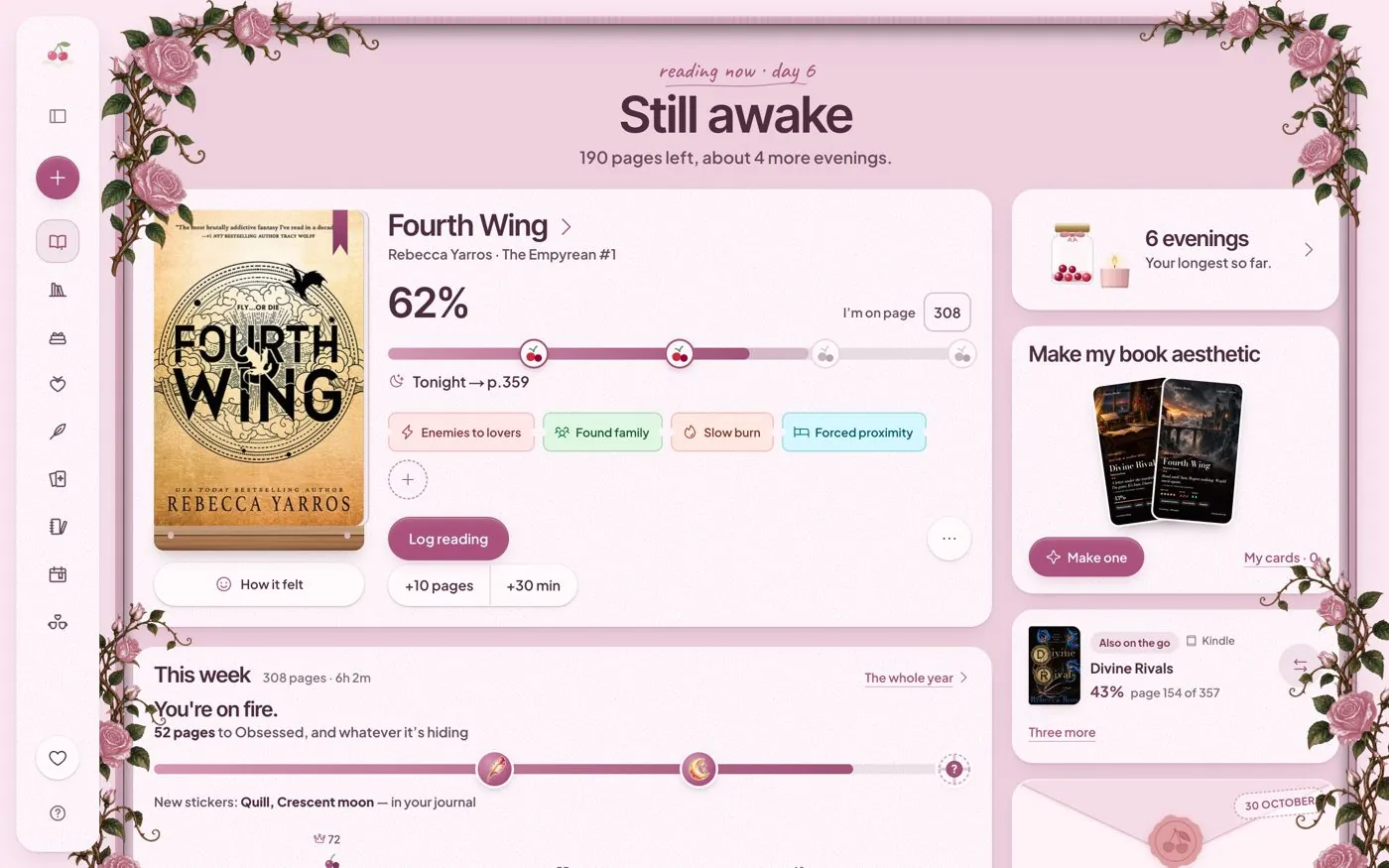
How to Track Your Reading as a Romance Reader
What a reading tracker for romance books should record beyond stars: spice, tears, tropes, series order and kept lines. A practical setup guide.
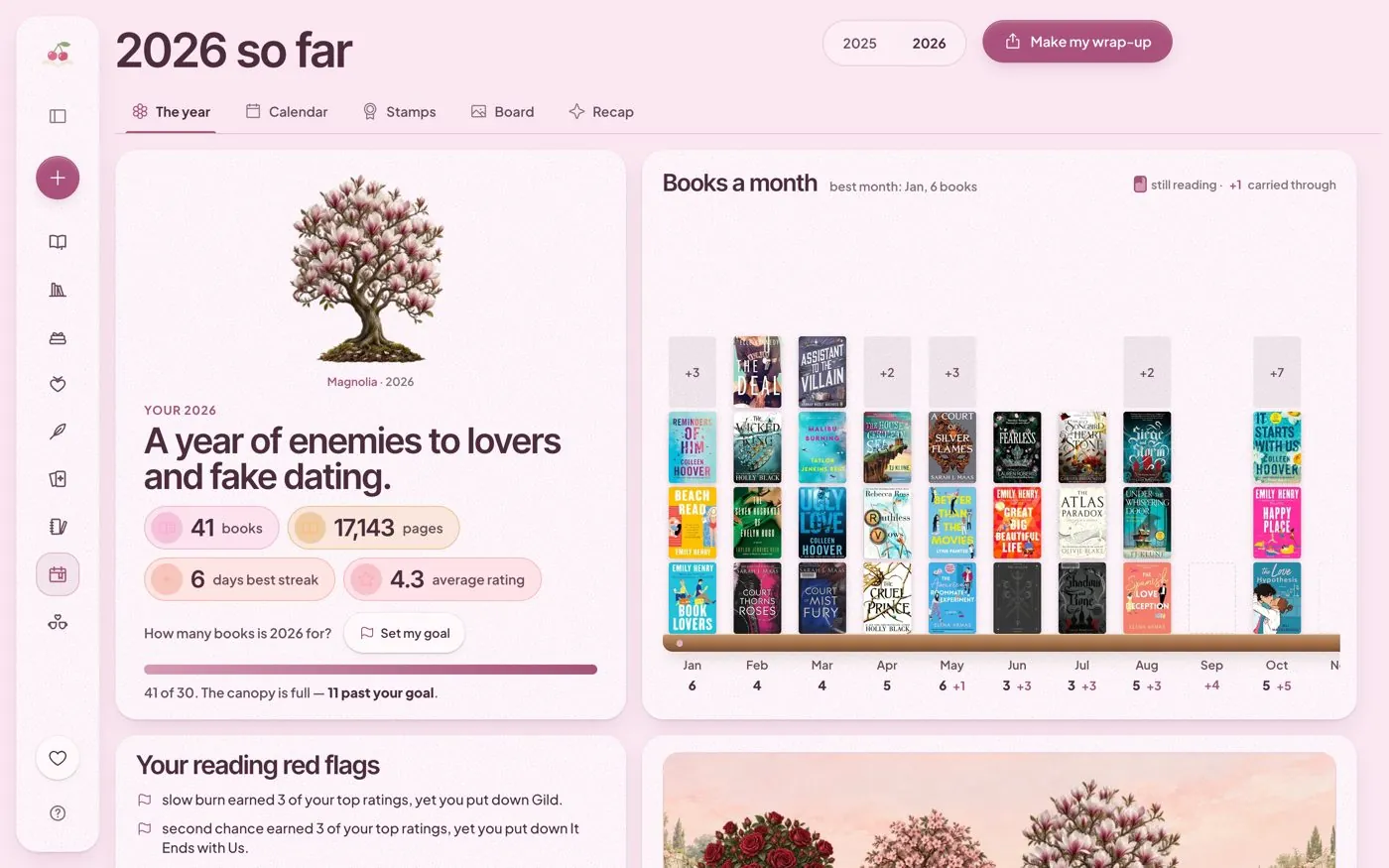
How to Wrap Up Your Reading Year: A Year-in-Books Recap Guide
What to count, how to collect it and how to share it: a practical guide to a year-in-books reading recap, with stats worth tracking and prompts.
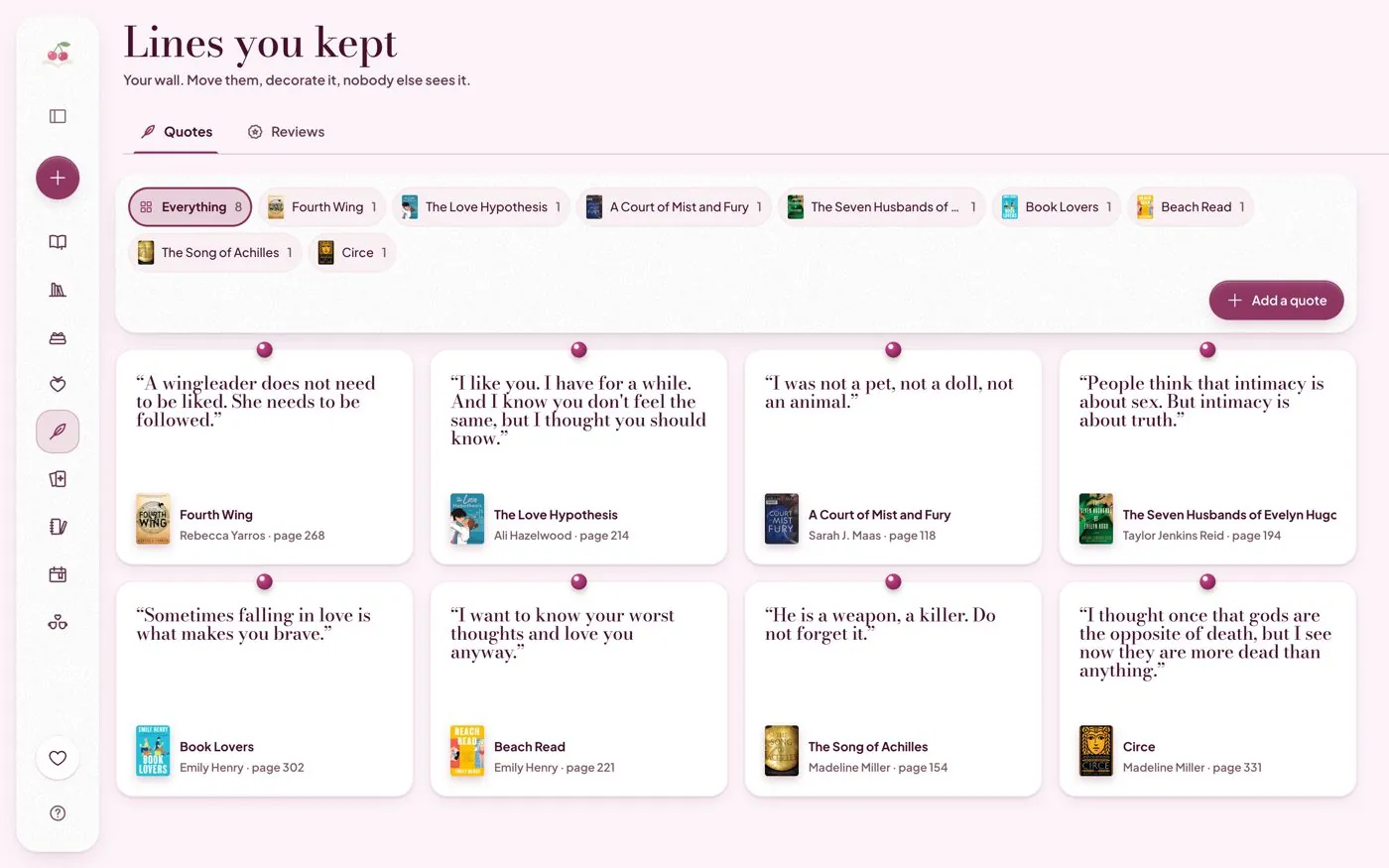
Spice and Tear Ratings, Explained (and How to Build Your Own Scale)
Closed door, open door, one flame or five? How spice ratings and tear ratings work for romance readers, and how to build a scale you can use consistently.