21 Reading Journal Ideas That Make Every Book More Memorable
On this page
You don't need perfect handwriting, expensive stickers, or a hundred-page setup to keep a reading journal. A few thoughtful prompts can turn ordinary reading notes into something you'll love looking back on.
Here are 21 ideas to mix, match, and make your own.
Quick prompts for any book
- One-sentence review: Explain the whole experience in one sentence, not the plot.
- Three-word mood: Pick three words that describe how the book felt.
- The moment I was hooked: Note the scene that made you want to keep reading.
- Favorite character and why: Focus on a decision or contradiction that made them interesting.
- A quote worth keeping: Add the page and why the line mattered.
- Would I reread it? Answer yes, no, or maybe—and explain why.
- Who should read this? Imagine the one friend who would love it.
Creative layouts for your reading life
- Bookshelf of the month: Save covers of books finished this month.
- Mood map: Group books into comforting, chaotic, romantic, bittersweet, and eerie.
- Favorite tropes: Track the tropes you keep returning to.
- Character awards: Most lovable, most frustrating, best growth, biggest surprise.
- Reading soundtrack: Pair a book with a song or an original playlist title.
- Book-and-place memory: Record where you were when you finished it.
- Unfinished-but-unforgotten: Keep a compassionate DNF list with reasons.
For romantasy and fiction readers
- Worldbuilding notes: Record one fascinating detail about a fictional world.
- Relationship timeline: Track how characters' dynamics change, privately and with spoiler labels.
- My theory before the ending: Capture your prediction before reading the last chapters.
- Emotional damage scale: Use playful personal labels, not an objective score.
Monthly and yearly reflection pages
- Best surprise: The book you expected little from but loved.
- Reading season: What did your reading choices say about this month?
- A letter to your future reading self: What do you want to read more—or less—next year?
How to keep it manageable
Choose one standard format, such as a sentence, mood, and favorite quote. Use one longer prompt only for books that inspire you. That way you won't confuse reading more thoughtfully with turning reading into unpaid admin work.
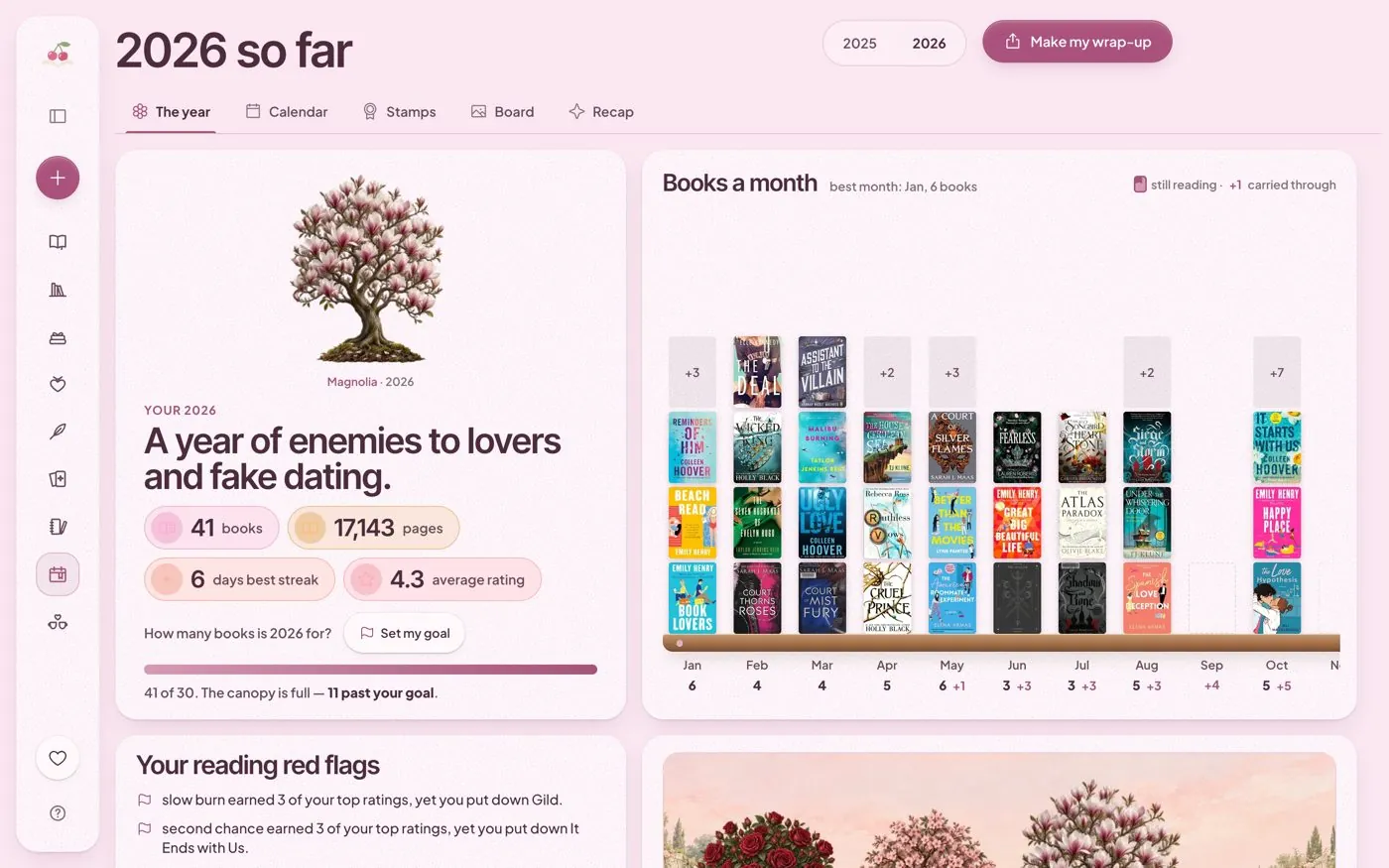
For a simple setup, see how to start a digital reading journal. When you want to look back at what you've finished, try a yearly reading reflection instead of focusing only on totals. If you need to organise the titles first, start with how to track books.
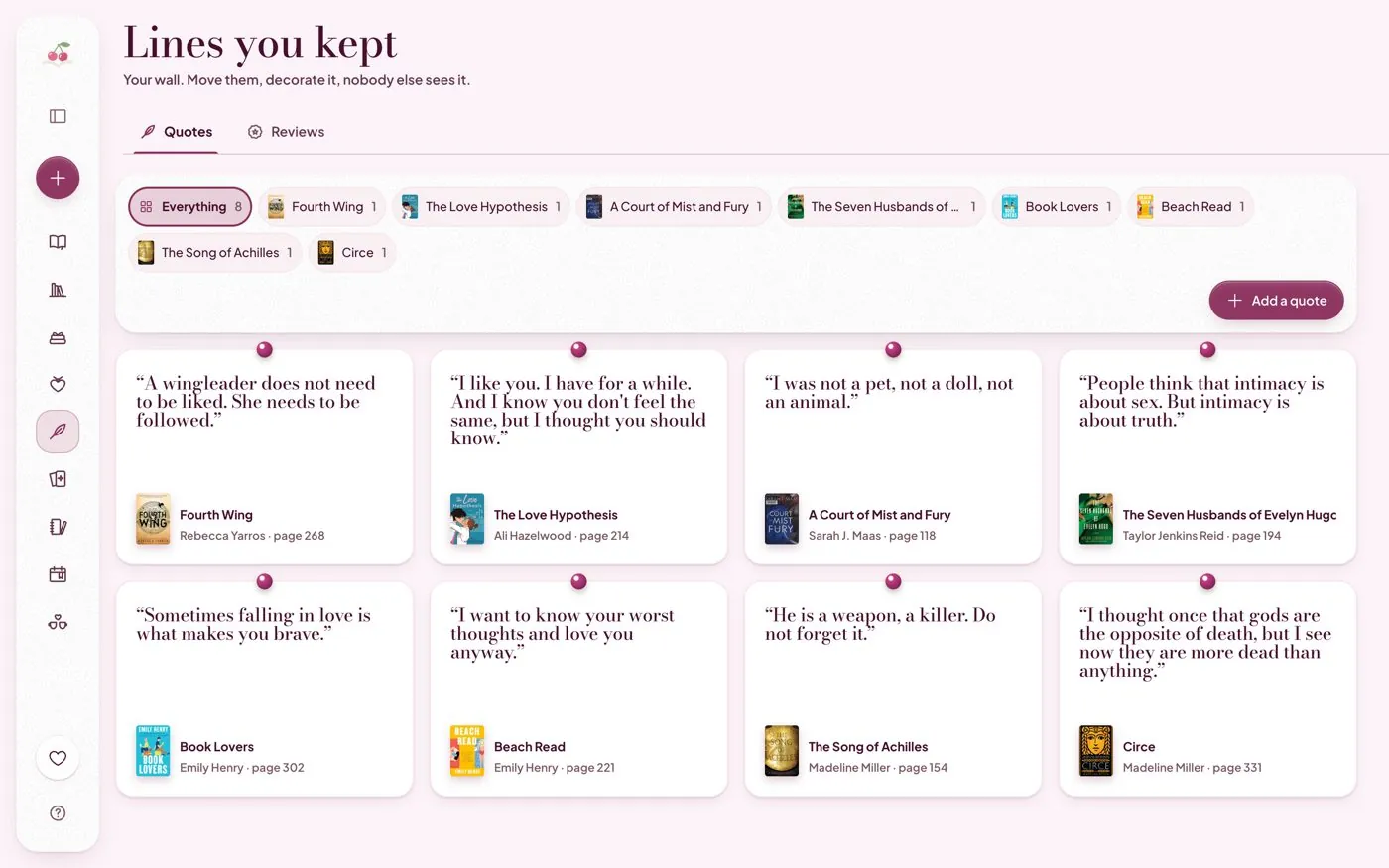
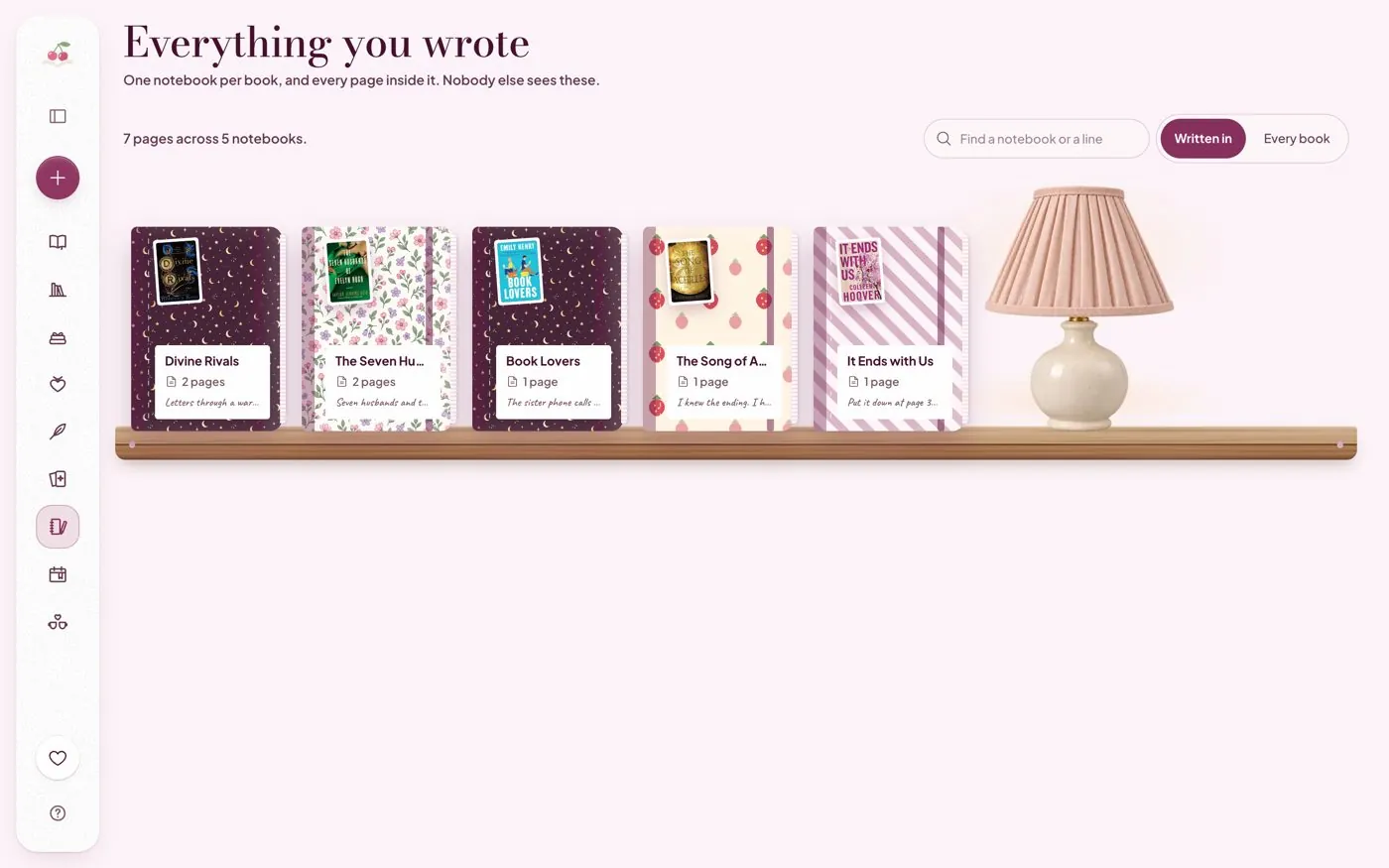
In Cherry Books, you can put a quick reflection in a book's notebook, keep a line with its page number on the quote wall, or revisit everything you wrote on the journal shelf. The in-app pages require access to the reading space; create an account to choose a plan and start your own shelf.
Frequently asked questions
What do I put on the first page of a reading journal?
Your reading intentions, a few favorite genres, and a short explanation of why you read.
Can I use a digital journal instead of a paper one?
Yes. Digital journals can make entries easier to edit, search, and organize. Choose the medium you enjoy returning to.
How many pages should I make for one book?
As many as feel useful. A single paragraph can preserve a better memory than five pages you never finish.
Try Cherry Books free for 7 days
Keep your notebooks, quotes, TBR and reading progress together. A payment card is required for the 7-day subscription trial. Cancel before the trial ends to avoid a charge; the monthly plan is $4.99 after the trial.
Keep reading
How to Start a Digital Reading Journal (and Actually Keep Using It)
Learn how to make a digital reading journal you'll enjoy using, with simple layouts, book notes, quotes, and reading reflections.
36 Reading Journal Prompts for Romance Readers (and How to Keep One)
Reading journal prompts for before, during and after a romance, plus a simple way to keep a journal on paper or in an app without it feeling like homework.
How to Wrap Up Your Reading Year: A Year-in-Books Recap Guide
What to count, how to collect it and how to share it: a practical guide to a year-in-books reading recap, with stats worth tracking and prompts.